Can Anyone Become A Witch?
- cunningmisstori
- Jul 17
- 4 min read

Every so often, I see a newbie witch ask on a Facebook forum, "Can anyone become a witch?" and today I felt compelled to answer the question. The short answer is yes—but the longer answer deserves a bit more explanation.
There are a lot of misconceptions about what it means to be a witch. Movies, television, social media, and even well-meaning practitioners sometimes make witchcraft seem like an exclusive club that only certain people are born into. While some families do pass magical traditions down through generations, having magical ancestry is not a requirement for practicing witchcraft.
Witchcraft is, first and foremost, a practice. Like painting, gardening, woodworking, or learning an instrument, it is a skill that develops through study, observation, experimentation, and experience.
You Don't Have to Be Born Into It
Many witches, myself included, did not grow up in households where witchcraft was openly practiced. Some discovered it through books. Others found it through folklore, herbalism, tarot, meditation, or a fascination with history and spirituality. While there are traditions that are hereditary or initiatory, witchcraft itself is not limited to those paths.
Having ancestors who practiced folk magic may give someone a unique cultural connection, but it does not automatically make them a skilled witch. Likewise, someone with no magical family history can become an incredibly knowledgeable and capable practitioner through dedication and consistent practice.
Your lineage may influence your journey—but it does not define your potential.
Witchcraft Is Learned
One of the biggest myths is that witches possess some mysterious supernatural power that ordinary people simply lack. In reality, witchcraft is a collection of skills.
Over time, witches learn things such as:
Building relationships with spirits, deities, or ancestors (if that aligns with their beliefs)
Understanding symbolism and correspondences
Working with herbs, roots, minerals, and resins
Reading tarot or other divination systems
Timing rituals around lunar or seasonal cycles
Creating spells with clear intention
Developing intuition through practice
Recognizing folklore and magical traditions
None of these abilities appear overnight. Like any craft, they improve with study and repetition.
Do You Need Psychic Abilities?
Another common concern I see floating around the social media sphere from time to time is:
"I'm not psychic. Can I still be a witch?"
And the answer is: Absolutely. While some practitioners naturally have stronger intuitive abilities, psychic gifts are not a requirement. Many successful witches rely on careful observation, symbolism, historical knowledge, and disciplined magical practice rather than dramatic psychic experiences.
Intuition can also be strengthened over time. Much like learning a language or developing artistic ability, many people discover that their awareness becomes sharper the more they practice.
Do You Have to Follow a Religion?
No. Point blank period. Witchcraft and religion are not the same thing. Some witches are Pagan. Some are polytheists. Some work with gods and goddesses. Some honor ancestors.
Some are animists. Some are Christian folk practitioners. Others are completely secular and view witchcraft as a psychological or symbolic practice. Hell, I've even heard of athiestic witchcraft before.
There is no universal religious requirement for practicing witchcraft. Your spiritual beliefs—or lack thereof—do not determine whether you can learn the craft.
Do You Need Expensive Supplies?
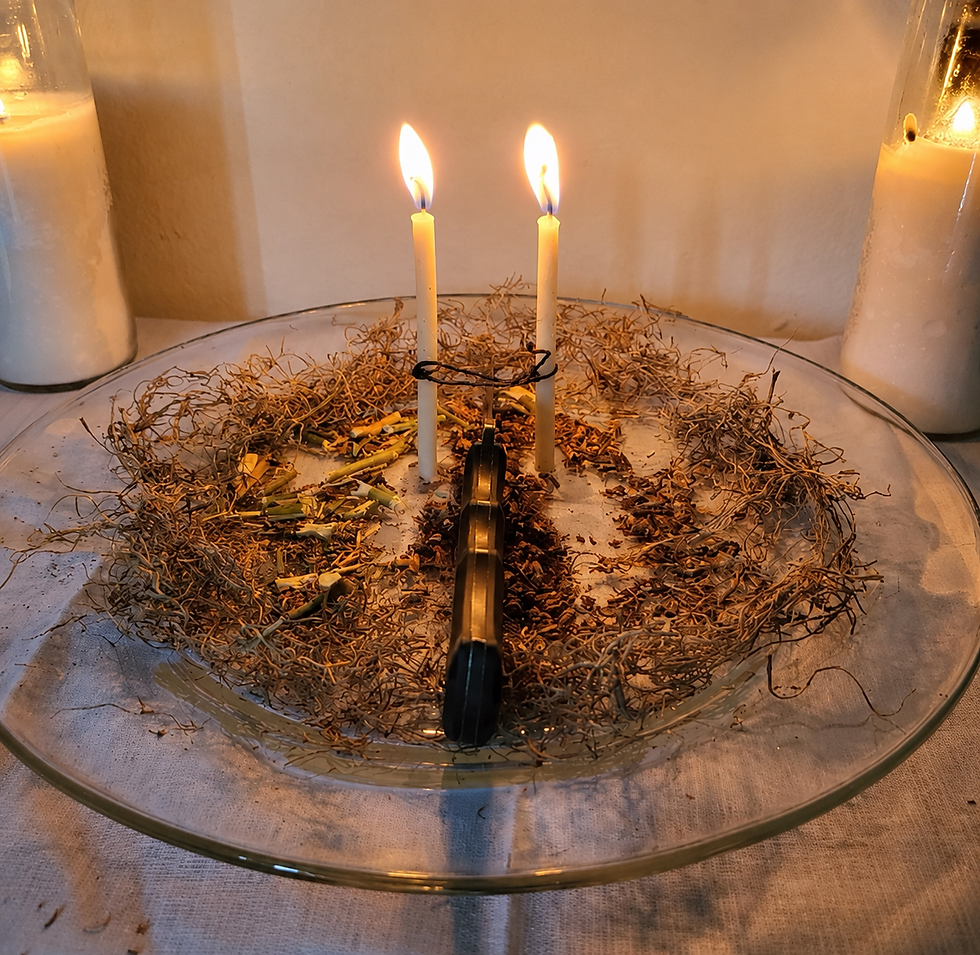
Not at all. Social media often makes it seem like every witch needs shelves full of crystals, hundreds of candles, rare herbs, elaborate altars, and handcrafted ritual tools. The truth is much simpler, though. Historically, many witches and cunning folk worked with whatever was available in their local environment.
A candle.
A bowl of water.
A kitchen herb.
A piece of paper.
A spoken prayer.
These simple tools have been used effectively for centuries. Magical ability does not come from owning expensive supplies; it comes from understanding how and why you use them.
What Makes Someone a Witch?
People often expect there to be a formal checklist and the truth is simply that there isn't one.
Generally speaking, a witch is someone who intentionally practices witchcraft. That practice might include spellwork, divination, herbalism, spirit work, folk magic, candle magic, ancestor work, or many other methods. Some practice daily while others only perform rituals for important occasions. Some specialize in one area, while others explore many different branches over a lifetime.
There is no universal governing body that decides who is or isn't a witch. Instead, becoming a witch is an ongoing journey of learning, practicing, reflecting, and growing.
Can You Learn on Your Own?
You might be shocked to hear it but my answer is an absolute YES. Many experienced witches are self-taught. Books, historical research, journals, and personal experimentation have always been valuable teachers. That said, learning from an experienced mentor can often help you avoid common mistakes, understand historical context, receive personalized guidance, and build confidence more quickly. Neither approach is "more legitimate." They simply offer different learning experiences.
What Qualities Matter Most?
If someone asks me what makes a successful witch, my answer isn't ancestry or natural talent.
It's curiosity.
Patience.
Critical thinking.
Respect for the traditions you're studying.
A willingness to keep learning.
The best witches I have met are rarely the loudest people in the room. They aren't trying to convince everyone they're powerful, they're students of the craft. Even after decades of practice, they continue asking questions, testing ideas, reading new material, and refining their understanding.
My Perspective
After more than twenty years of practicing witchcraft, one lesson has remained constant:
There is always more to learn.
Whether you've been practicing for two weeks or twenty years, every witch is still a student in some way.
If you're willing to approach the craft with genuine curiosity, consistent practice, and respect for its history and traditions, you already possess the most important qualities needed to begin.
You don't need permission.
You don't need magical ancestry.
You don't need expensive tools.
You simply need the willingness to learn.
Final Thoughts
So, can anyone become a witch?
Yes.
Witchcraft is not reserved for a chosen few. It is a living practice that has been learned, adapted, and passed from person to person for centuries.
Some will find that the path becomes a lifelong calling. Others may simply borrow a few practices that enrich their spiritual lives.
Wherever your journey leads, remember that every experienced witch once stood exactly where you are now: asking questions, making mistakes, and taking their very first steps into the craft.


Comments